Blog

Notes on thinking out loud.

Notes on voice journaling, racing minds, and building Nuro. Product updates, use cases, and the occasional rabbit hole.

How to practice a wedding speech out loud (without memorizing it)
Guides7 min read

How to practice a wedding speech out loud (without memorizing it)

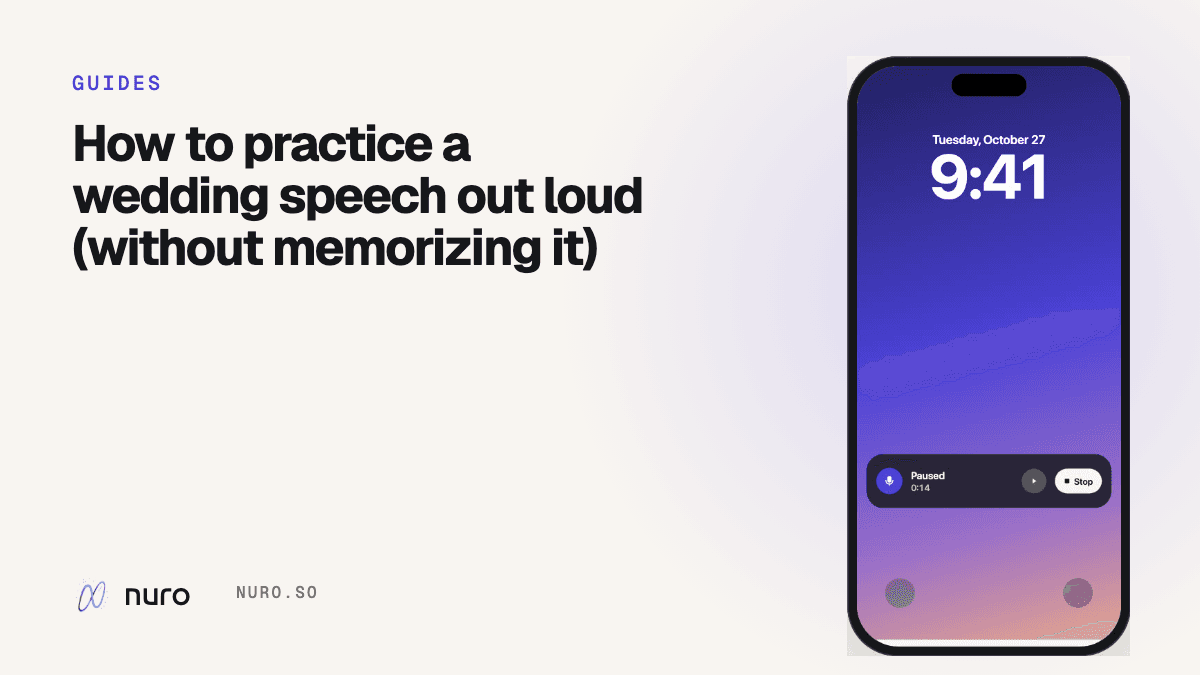
Talk the speech before you write it, record each run-through, keep the lines that sounded like you, and practice from three or four cue words instead of a script. Here's a two-week plan.
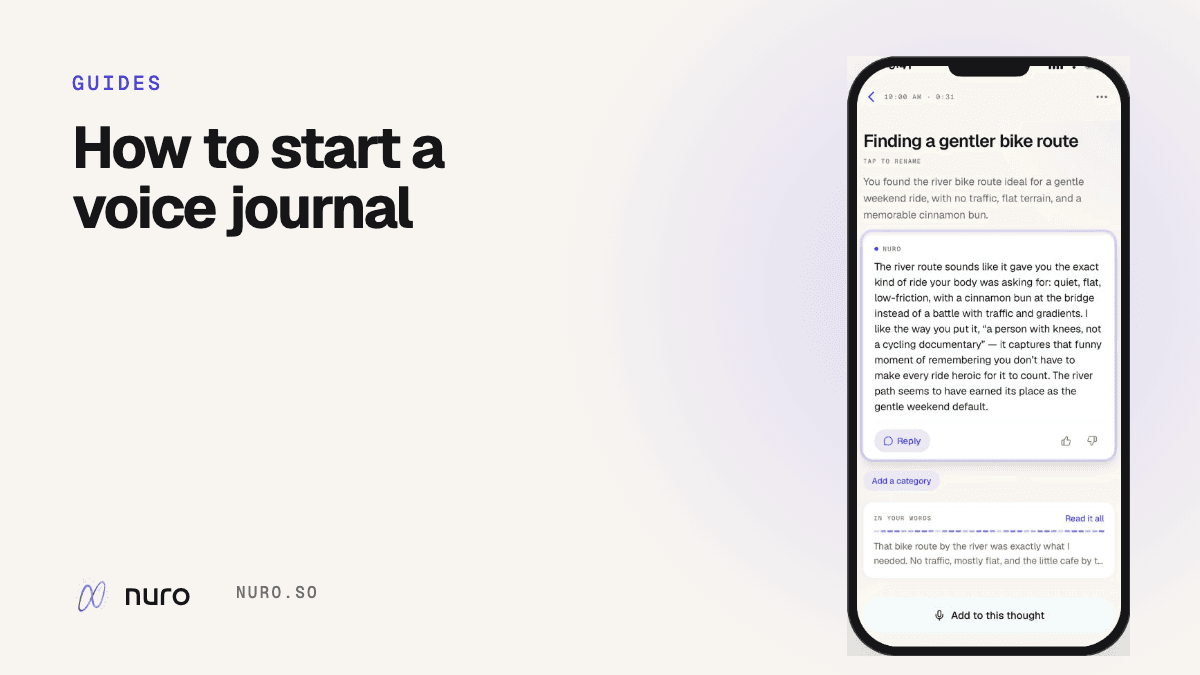
How to start a voice journal: a simple first week
Guides7 min read

How to start a voice journal: a simple first week

Pick one moment a day, talk for two to five minutes, and don't listen back until the end of the week. Here's a first-week plan, what to say when you don't know what to say, and how to set it up on an iPhone with or without Nuro.

Why do I get my best ideas in the shower? What the research says
Guides7 min read

Why do I get my best ideas in the shower? What the research says

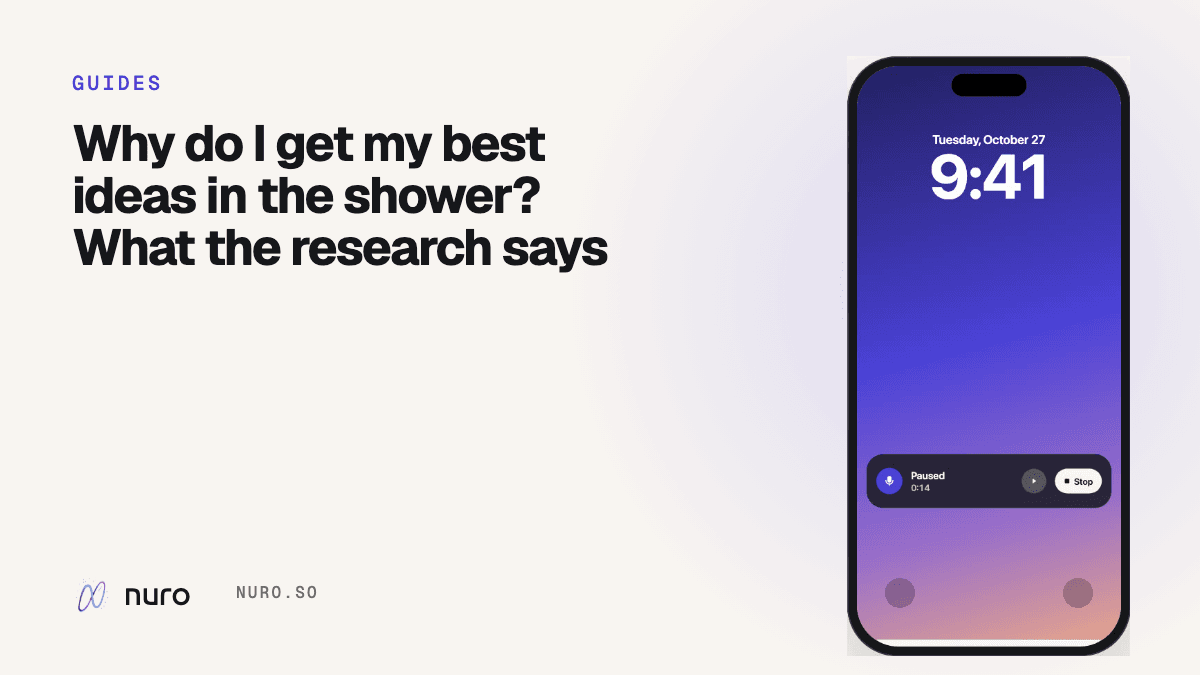
Ideas often arrive in the shower because you've stepped away from the problem and your mind is free to wander, but not so free that it's bored. Here's what the studies actually found, where they disagree, and how to catch the idea before it's gone.

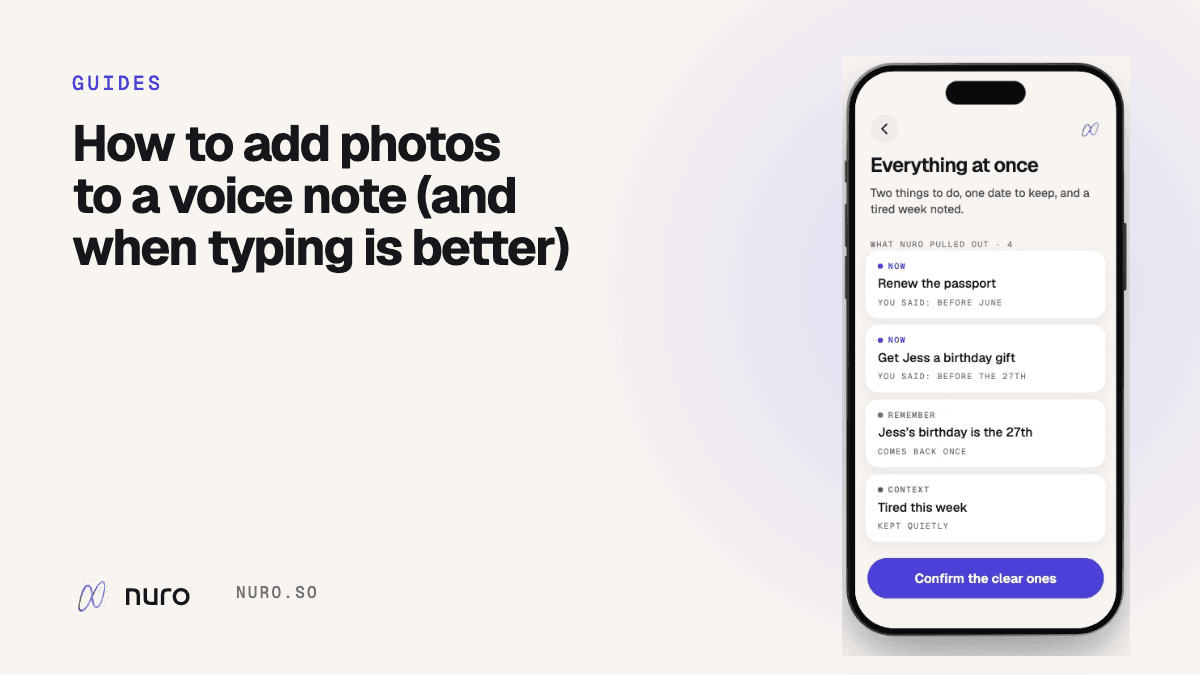
How to add photos to a voice note (and when typing is better)
Guides4 min read

How to add photos to a voice note (and when typing is better)

Some thoughts come with a picture: the receipt, the whiteboard, the label on the paint can. Here's how to keep the photo and the voice note together, and how to switch to typing when talking isn't an option.

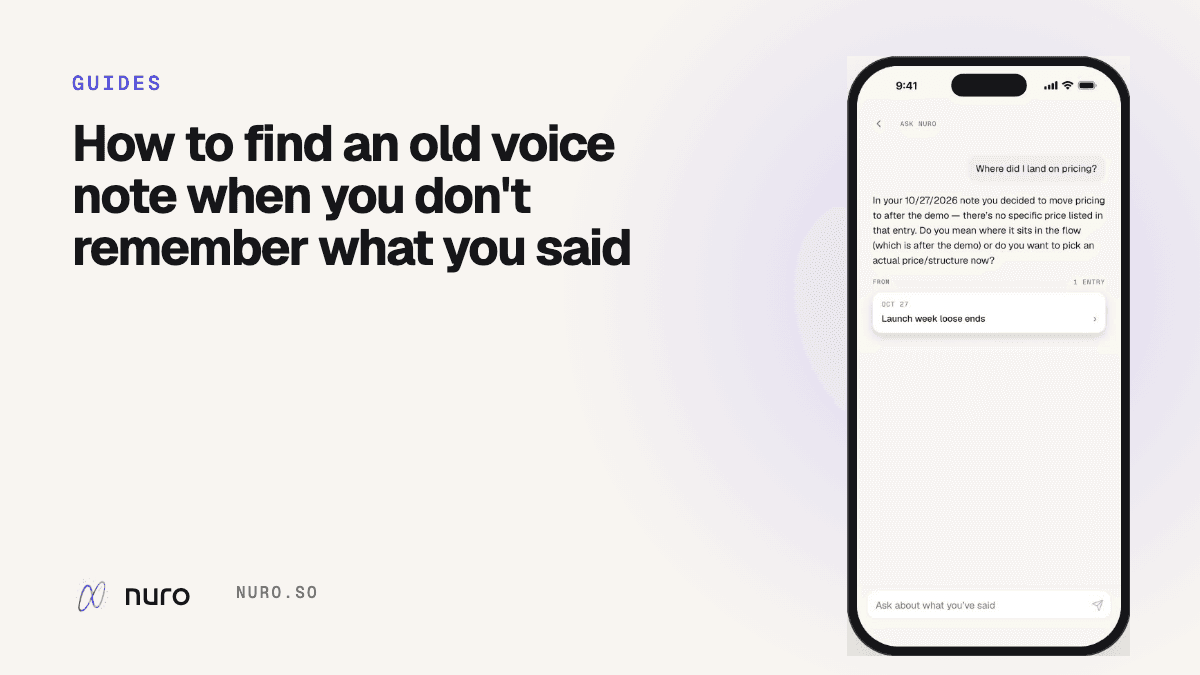
How to find an old voice note when you don't remember what you said
Guides4 min read

How to find an old voice note when you don't remember what you said

Searching voice recordings works when you remember the exact words. Most of the time you don't. Here's how to find a voice note by what it was about, and how to ask your notes a question instead.

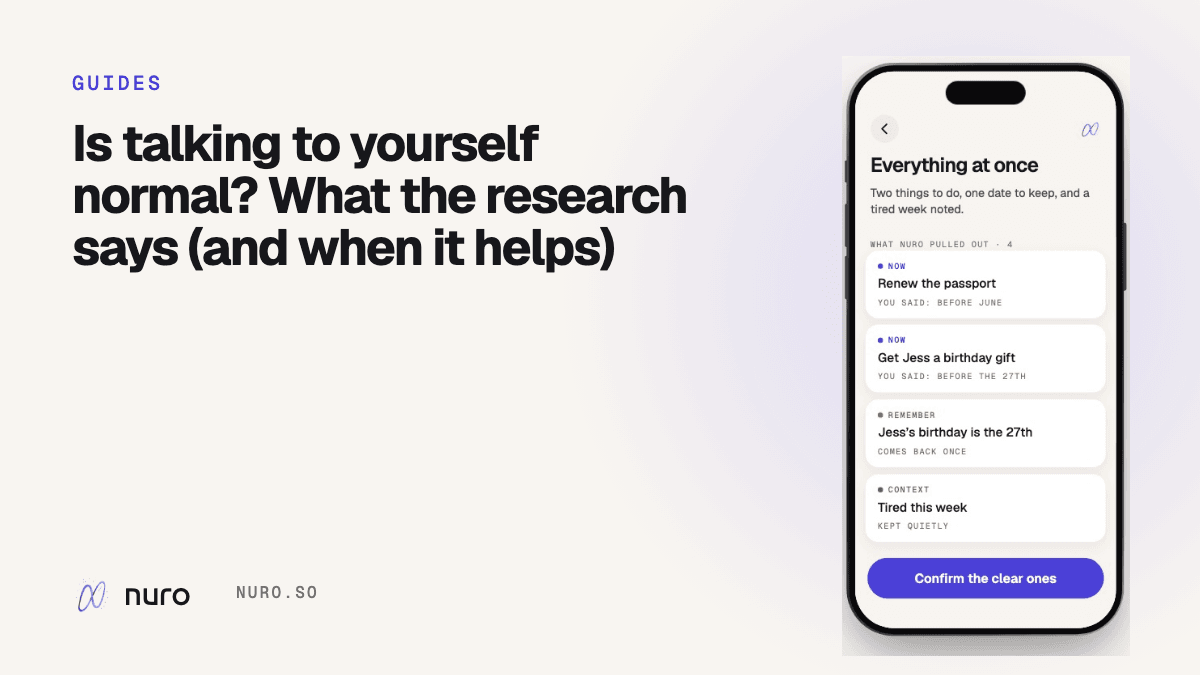
Is talking to yourself normal? What the research says (and when it helps)
Guides7 min read

Is talking to yourself normal? What the research says (and when it helps)

Yes, talking to yourself is normal, out loud or in your head. Here is why people do it, what a few studies found about saying things out loud and using your own name, and the rare cases worth mentioning to a doctor.

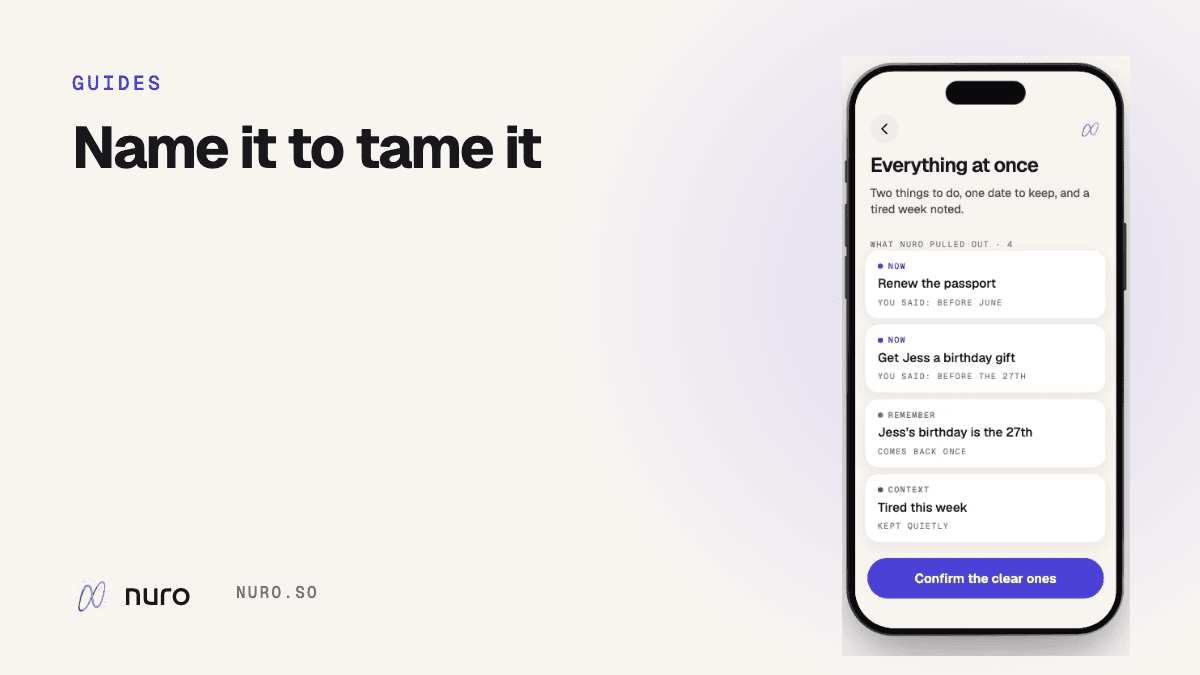
Name it to tame it: what the research on labeling feelings really shows
Guides7 min read

Name it to tame it: what the research on labeling feelings really shows

"Name it to tame it" means putting a feeling into words can take a little of the edge off it. The research behind it, called affect labeling, is real but modest: lab tasks, small effects, measured over seconds. Here's what it shows, what it doesn't, and a two-minute way to try it out loud.

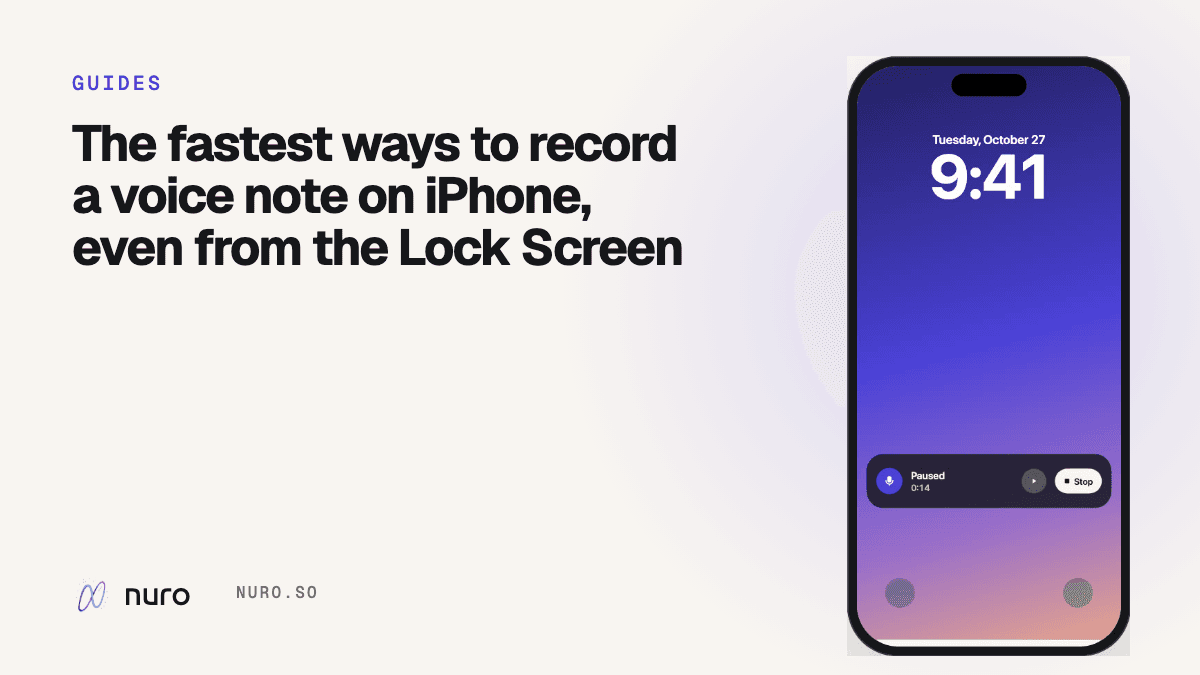
The fastest ways to record a voice note on iPhone, even from the Lock Screen
Guides4 min read

The fastest ways to record a voice note on iPhone, even from the Lock Screen

A thought you have to unlock, find an app and tap three times to keep is a thought you'll lose. Here are the quickest ways to start recording on an iPhone, built-in and with Nuro.

Can't sleep thinking about tomorrow? Try a to-do list before bed
Guides7 min read

Can't sleep thinking about tomorrow? Try a to-do list before bed

In one sleep-lab study, people who spent five minutes writing a specific to-do list before bed fell asleep faster than people who wrote about what they'd already done. Here's exactly what that study found, what it didn't, and a spoken version to try tonight.

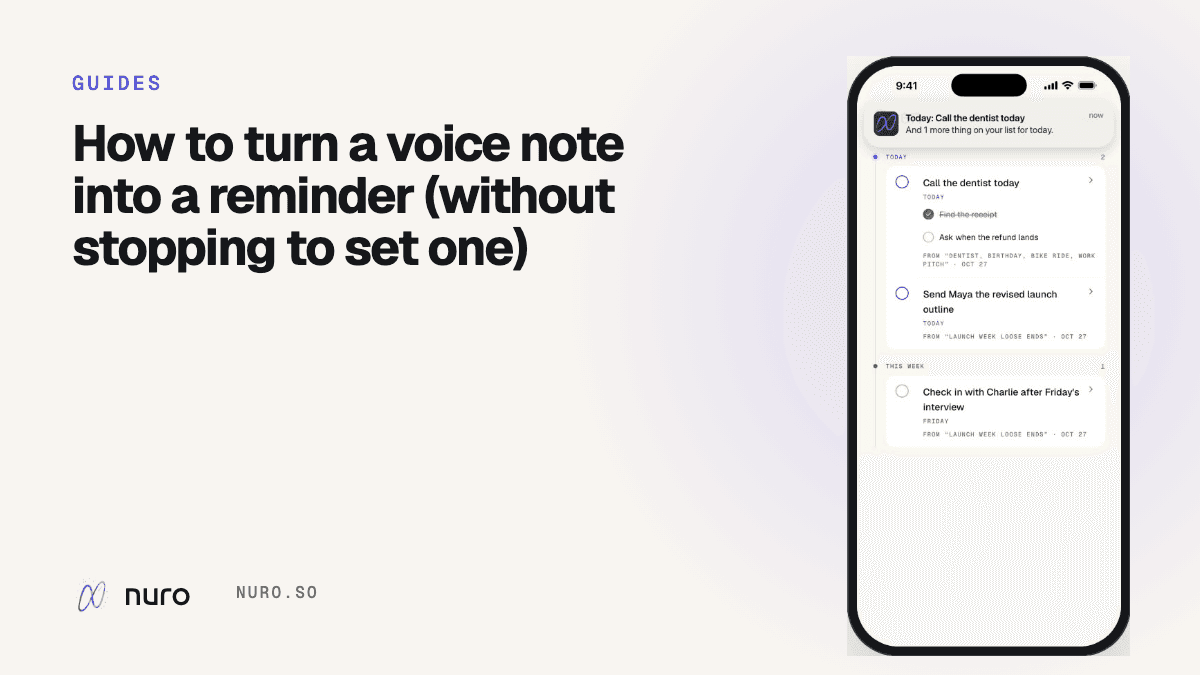
How to turn a voice note into a reminder (without stopping to set one)
Guides4 min read

How to turn a voice note into a reminder (without stopping to set one)

You said you'd call on Thursday. Then you forgot, because it was buried in a two-minute voice note. Here's how to get reminders out of the way you actually talk.

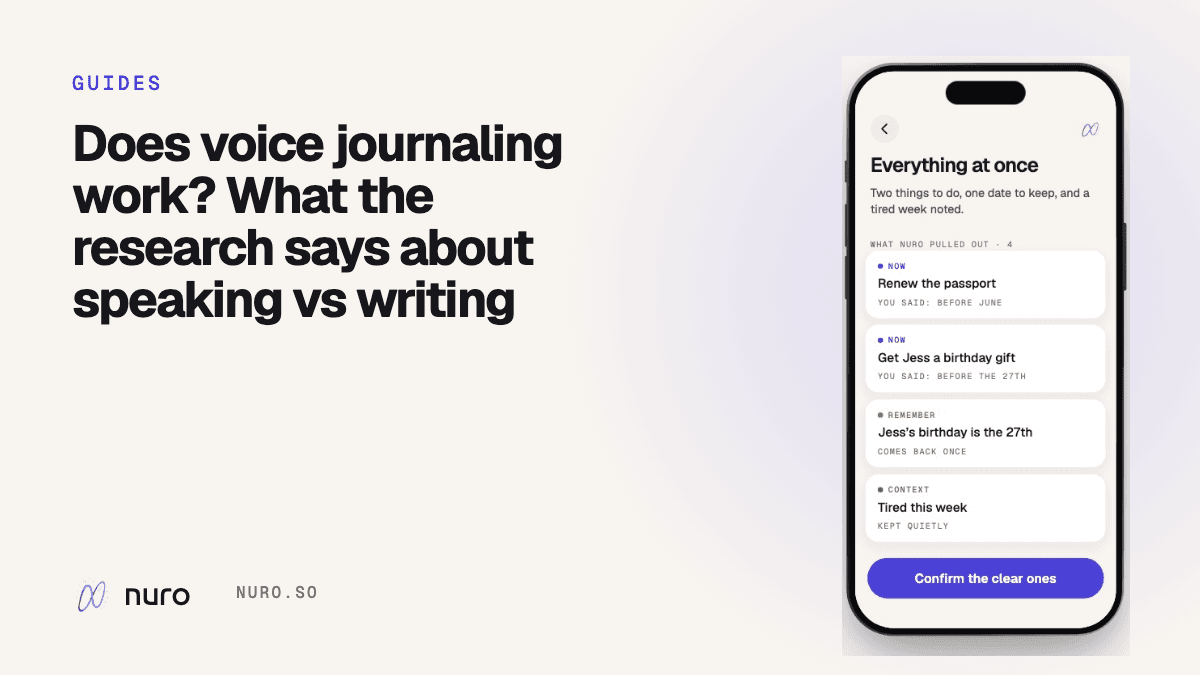
Does voice journaling work? What the research says about speaking vs writing
Guides7 min read

Does voice journaling work? What the research says about speaking vs writing

Most of the research on journaling is about writing, not voice. Here's what decades of expressive-writing studies found, what the few spoken-versus-written studies show, and an honest read on what that means for voice journaling.

What's new in Nuro 3.0.9: start from anywhere, reminded on the day
Product4 min read

What's new in Nuro 3.0.9: start from anywhere, reminded on the day

Nuro 3.0.9 starts a recording from your Home Screen, Lock Screen or Control Center, reminds you about to-dos on the day you named, finds entries by meaning, and lets you add photos or switch to typing mid-thought.

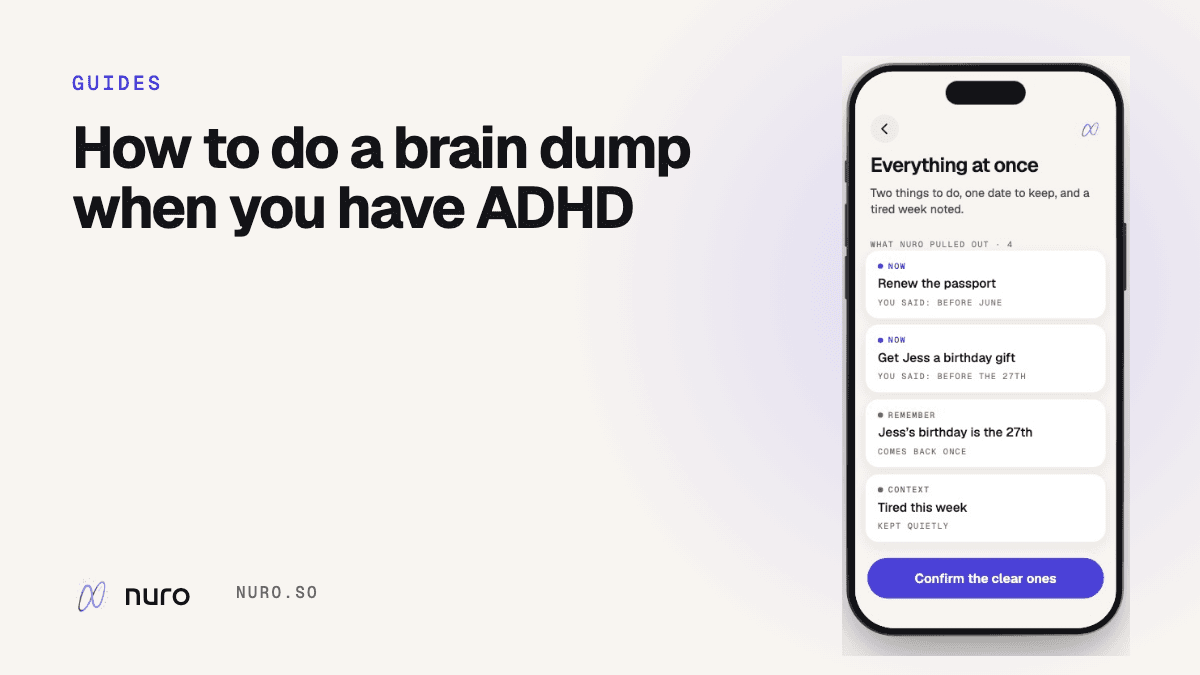
How to do a brain dump when you have ADHD
Guides6 min read

How to do a brain dump when you have ADHD

Talk instead of writing, don't sort while you dump, then spend two minutes on the step after. A short, skimmable brain dump method for ADHD brains.

The best brain dump apps in 2026, honestly compared
Comparisons16 min read

The best brain dump apps in 2026, honestly compared

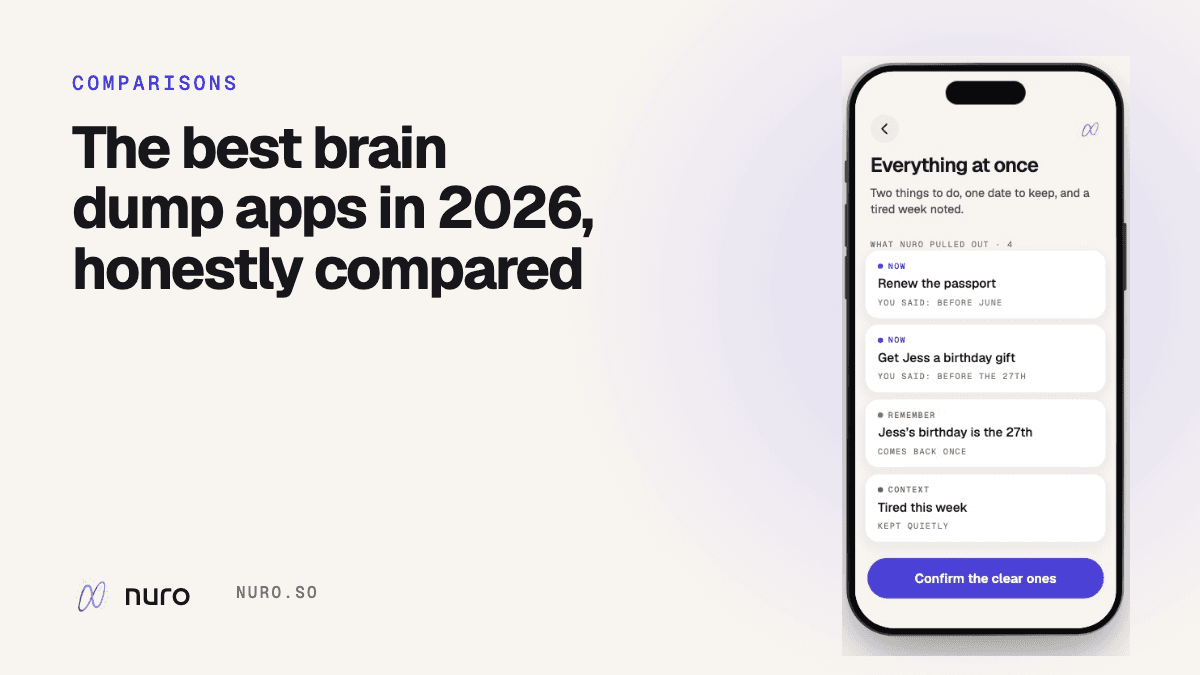
Ten apps for getting everything out of your head, compared on price, platforms, voice, to-dos, reminders and whether they keep your audio. Written by the person who makes Nuro, with that bias stated up front.

How to brain dump, and what to do once it's all out
Guides8 min read

How to brain dump, and what to do once it's all out

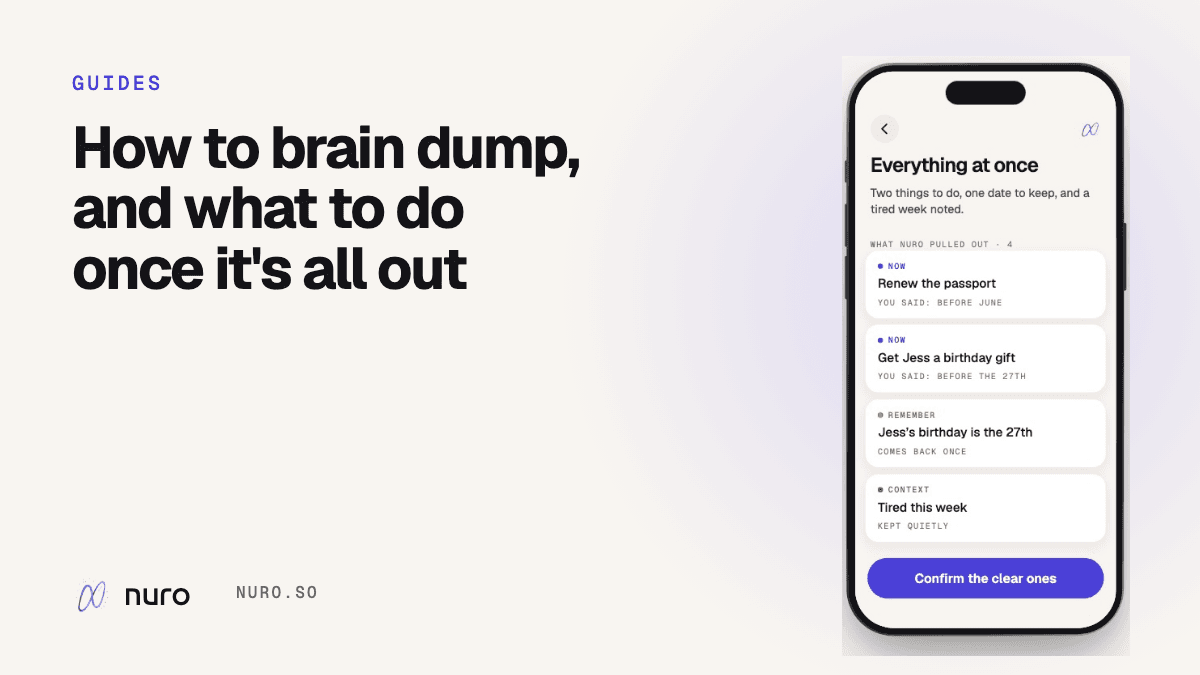
A brain dump is ten minutes of getting everything out of your head, then sorting it. Here's the classic paper method, the spoken version, and the sorting step most guides skip.

How to prepare for a difficult conversation (by rehearsing it out loud, once)
Guides9 min read

How to prepare for a difficult conversation (by rehearsing it out loud, once)

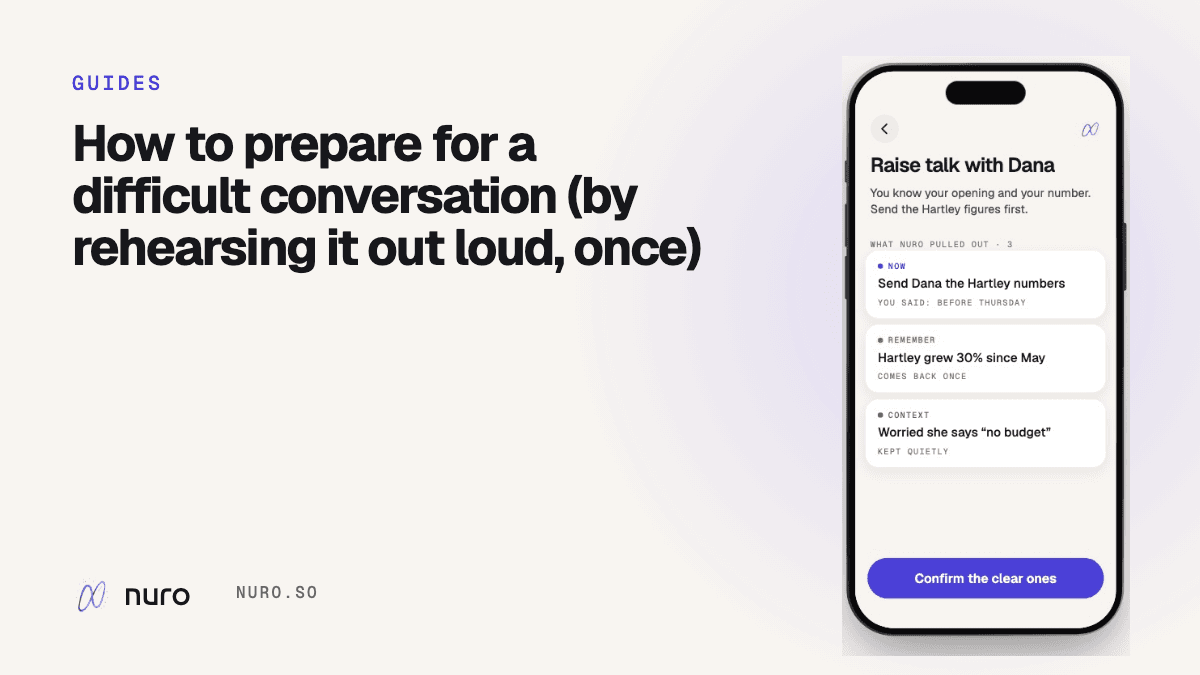
Most advice says to practice a hard conversation but never says how. Here is a ten-minute method: say your purpose, your opening, your ask and your answer to the worst reply out loud, listen back once, then stop.

How to stop thinking about work after hours: a five-minute spoken shutdown
Guides7 min read

How to stop thinking about work after hours: a five-minute spoken shutdown

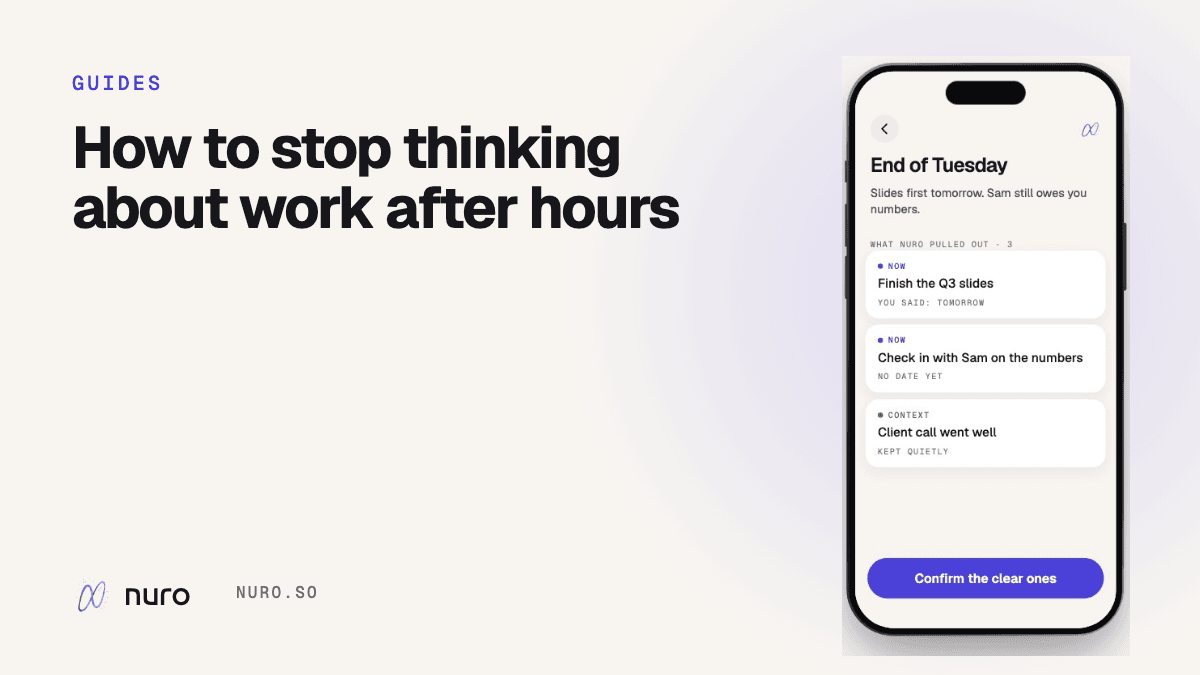
Work follows you home when loose ends have no plan. A five-minute shutdown ritual, said out loud, gives each one a place so you can actually close the laptop.

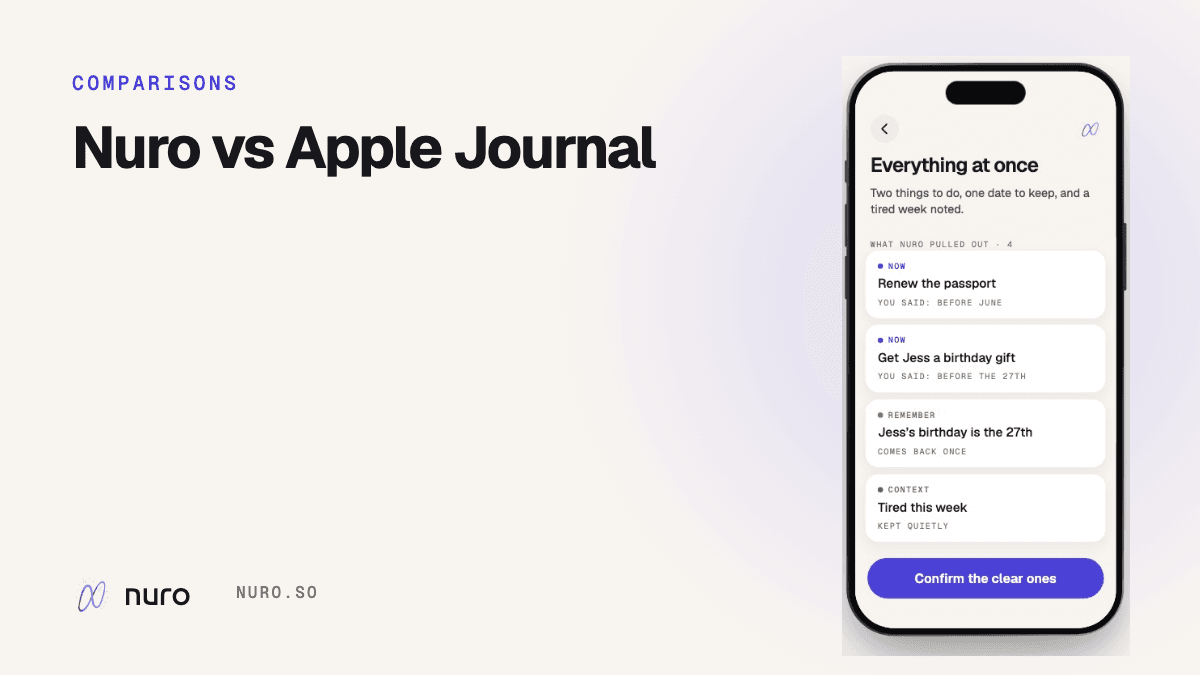
Nuro vs Apple Journal: a diary or a place to empty your head?
Comparisons7 min read

Nuro vs Apple Journal: a diary or a place to empty your head?

Apple Journal is free, lovely and built into your iPhone. Nuro costs money and does a different job. Here's an honest comparison of who should use which.

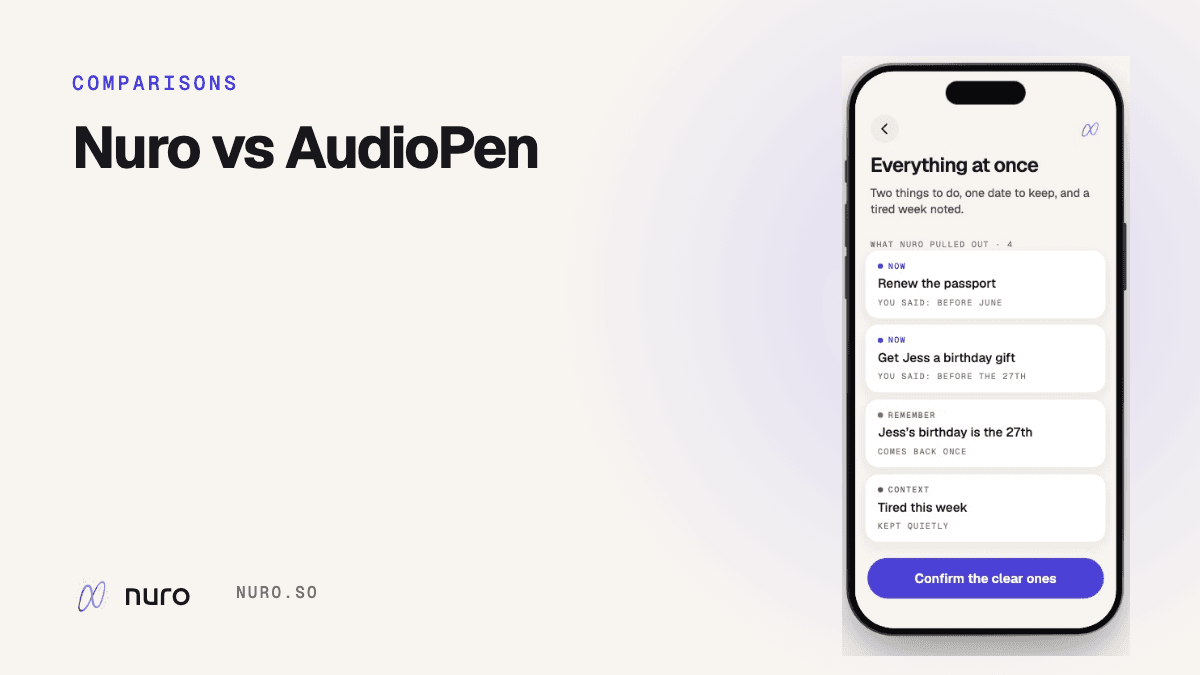
Nuro vs AudioPen: polished writing or a sorted head?
Comparisons7 min read

Nuro vs AudioPen: polished writing or a sorted head?

AudioPen turns messy talking into clean writing. Nuro turns it into to-dos, things to remember and context you confirm. Both are good; here's how to tell which one you need.

Nuro vs ChatGPT voice mode for brain dumps
Comparisons7 min read

Nuro vs ChatGPT voice mode for brain dumps

Lots of people already brain dump into ChatGPT, and it's a great thinking partner. Here's what it does better than Nuro, and what you get from a dated, searchable record of your own words instead.

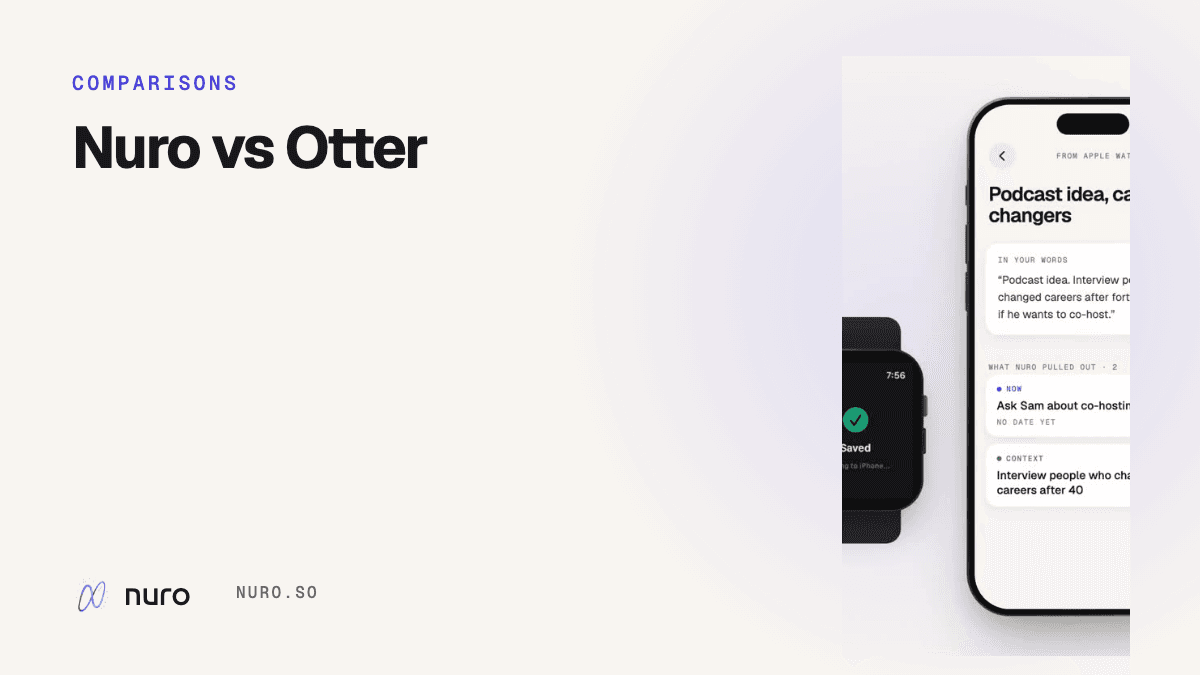
Nuro vs Otter: which one fits how you use your voice?
Comparisons7 min read

Nuro vs Otter: which one fits how you use your voice?

Otter is built for meetings and other people's voices. Nuro is built for your own thoughts. Here's an honest side-by-side, including where Otter is clearly the better pick.

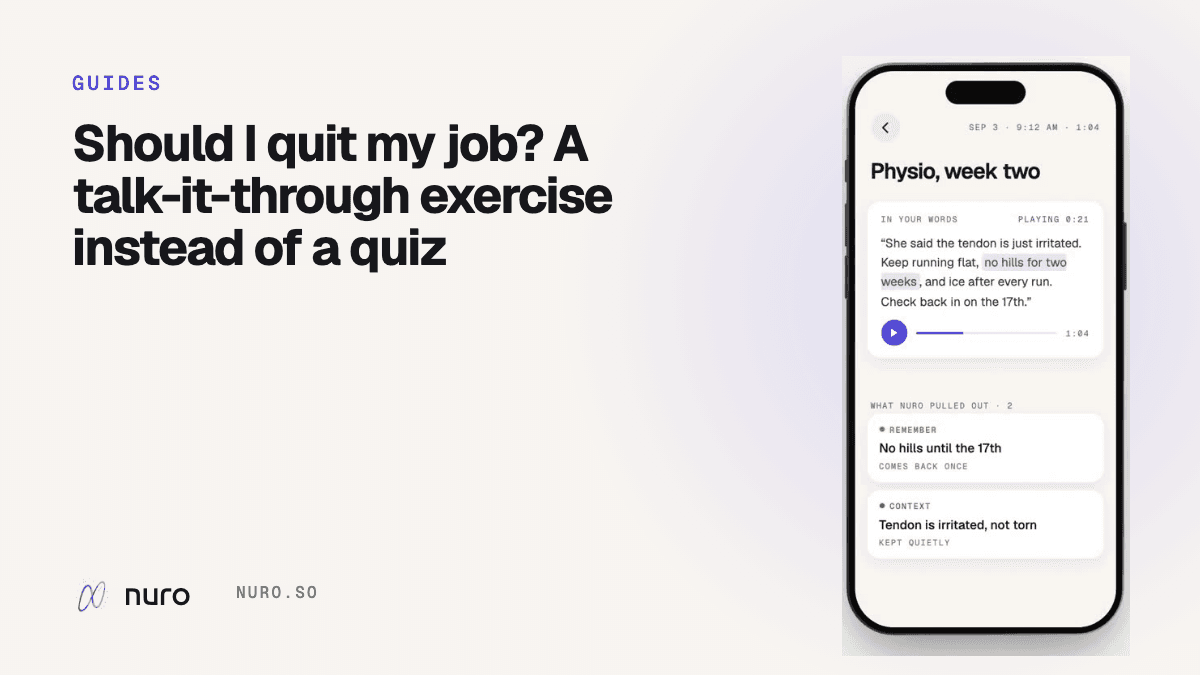
Should I quit my job? A talk-it-through exercise instead of a quiz
Guides8 min read

Should I quit my job? A talk-it-through exercise instead of a quiz

No quiz knows your job, your money or your manager. Here are eight questions to answer out loud, then a way to listen back for what you kept circling. It won't decide for you, but it often shows you what you already think.

What to say when asking for a raise: scripts, replies, and how to make them sound like you
Guides8 min read

What to say when asking for a raise: scripts, replies, and how to make them sound like you

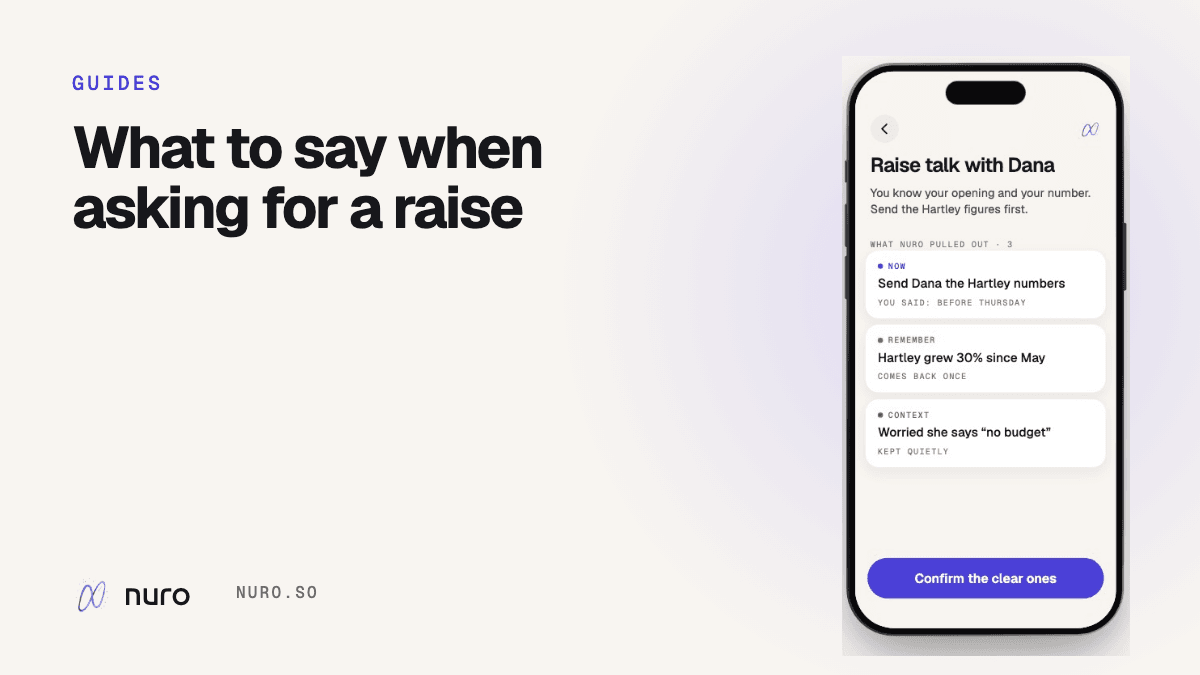
Word-for-word lines for opening the conversation, making the ask, and answering "there's no budget" and "let's revisit in six months". Plus the step most scripts skip: saying it out loud until it stops sounding like a script.

What's new in Nuro 3.0.7: a gentler first day
Product4 min read

What's new in Nuro 3.0.7: a gentler first day

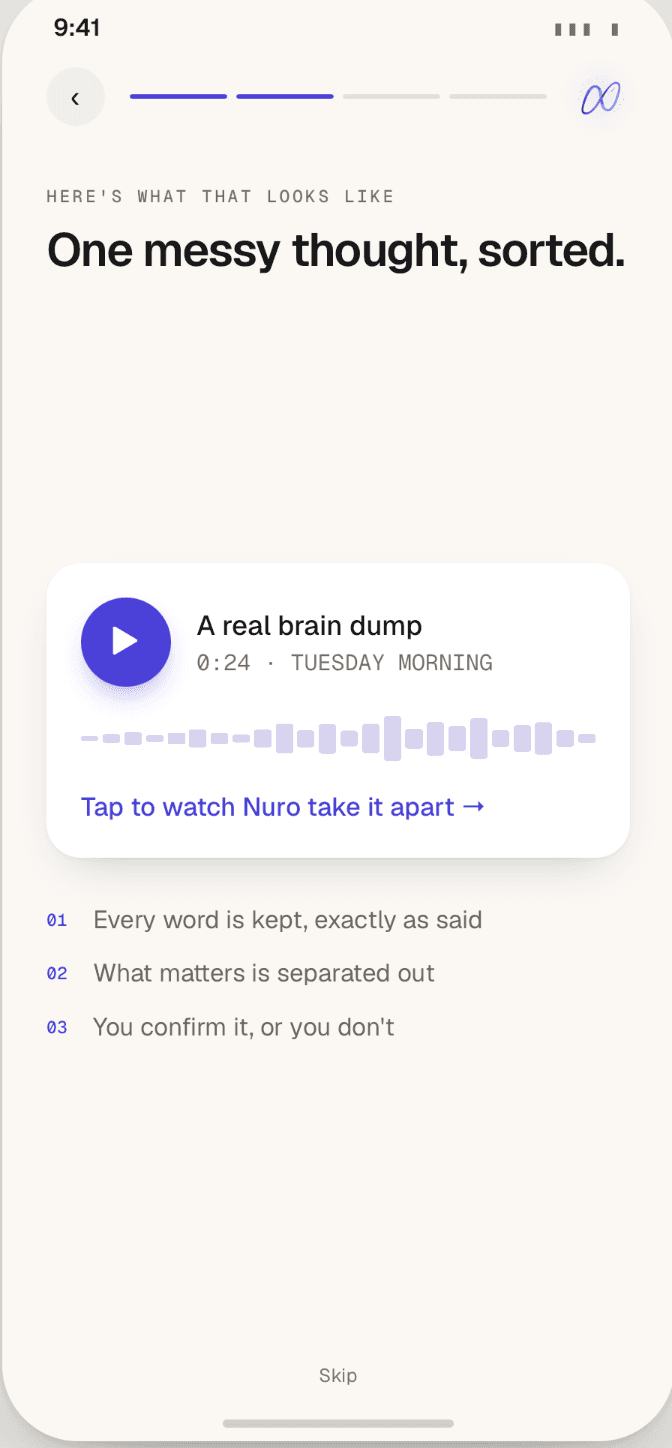
Nuro 3.0.7 gives new users a question to answer instead of a blank screen, adds an optional tour, opens every entry with a one-line summary, and makes the app easier to get around.

How Nuro Splits One Messy Voice Entry Into Separate, Useful Things
Product3 min read

How Nuro Splits One Messy Voice Entry Into Separate, Useful Things

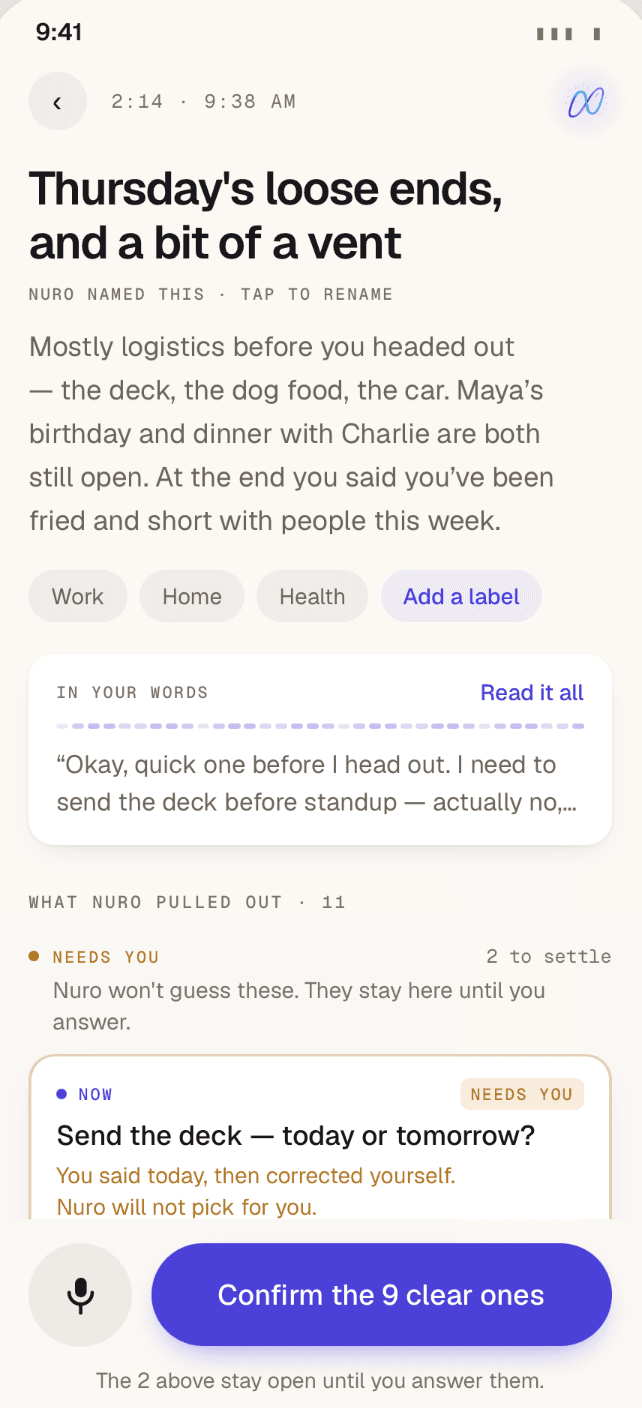
A real brain dump covers a task, a worry, and an idea in the same breath. Here's what Nuro actually does with an entry like that instead of collapsing it into one summary.

Needs You: How Nuro Handles What It Can't Figure Out on Its Own
Product3 min read

Needs You: How Nuro Handles What It Can't Figure Out on Its Own

Nuro doesn't guess quietly. When an entry has a task or detail it can't confidently place, it holds that one piece back and asks you — instead of filing a guess as fact.

Product3 min read

Still Open: What Happens to the Thing You Didn't Finish Today

Not every task gets closed the day you record it. Here's what Nuro does with the ones still hanging open when your day wraps up — and why nothing just quietly vanishes.

Great Thinkers Who Walked: From Aristotle to Steve Jobs
Inspiration5 min read

Great Thinkers Who Walked: From Aristotle to Steve Jobs

Aristotle, Nietzsche, Darwin, and Steve Jobs all knew the same secret: walking helps you think. Here's the history and science behind walking meetings and thinking walks.

Why Voice Beats Typing for Capturing Thoughts
Product4 min read

Why Voice Beats Typing for Capturing Thoughts

You think faster than you type. Here's why voice capture changes everything about how you process thoughts.

How Brand Identity Works: Understanding Your Personal Patterns
Product4 min read

How Brand Identity Works: Understanding Your Personal Patterns

After several entries, Nuro unlocks your Brand Identity — a synthesis of patterns across all your thinking. Here's how it works and how to use it.

The Science of Thinking Out Loud: Why Verbal Processing Works
Science & Research6 min read

The Science of Thinking Out Loud: Why Verbal Processing Works

Why does talking help us think? The answer lies in dual-process theory, the production effect, and affect labeling. Here's the neuroscience behind verbal processing.

Offline Recording: Capture Thoughts Anywhere, Sync Later
Product4 min read

Offline Recording: Capture Thoughts Anywhere, Sync Later

Great thoughts don't wait for WiFi. Nuro's offline recording lets you capture insights anywhere — on planes, hiking, or traveling abroad — and syncs automatically when you're back online.